things around the internet I find cool
Clippings
The Internet’s recency bias is bad for humanity. Our social media feeds prioritize recency over quality, which robs us of wisdom and makes us obsessed with the news. How to improve the Internet:
We already know what a world without work looks like
Our attitude to work is just one part of the historical transition to a liberal, democratic, individualist culture, but it is an important one. Today, work makes our personal independence materially possible. But even if our material needs are met, relying on our personal relationships to meet all our needs for identity and belonging creates a similar kind of dependence. We can see it in Ostrander’s ladies: When we take away more impersonal forms of work from the rest of the package, the older ties reassert themselves.
This is Pele, my new rendering library for diagrams and charts, compatible with the latest Mermaid syntax.
- 100-500× faster than mermaid.js
- 6× smaller bundle
- No dependencies
- Easy to theme
- Responsive to device width
In pursuit of making Obsidian insanely fast and cohesively designed, I always found the Mermaid library to be too big, too slow, and too hard to theme. Pele will be the new renderer in the next version of Obsidian, but you can start using it now.


I’m fascinated by the rise of frictionmaxxing as a response to a frictionless life. We engineer away inconvenience, only to discover that some of the friction we removed was part of what made life feel alive in the first place
Kristy Tillman @KristyT · 2026-10-19
Someone could probably write a book (if they haven’t already) about the cycle of technology productizing the removal of friction in the name of convenience only for us to discover that the friction was a load-bearing part of the social compact.


Young adults are poor despite every metric which suggests otherwise
Previous generations were able to take advantage of highly valuable and productive social capital as well as their exploding financial capital to move through each of these life stages in a fiscally efficient manner.
Our current young, lacking access to this social capital, must engage in enormous outlays of purely financial capital in order to achieve the same levels of stability and accomplishment — capital that they do not have.
Rewriting Bun in Rust
The initial version of Bun was written by me in 1 year, in a cramped Oakland apartment, pre-LLM, in Zig. The default outcome for ambitiously-scoped projects like Bun is joining the graveyard of dead side projects on a GitHub profile page. Zig made Bun possible.
Nowadays, Bun’s CLI gets over 22 million monthly downloads.
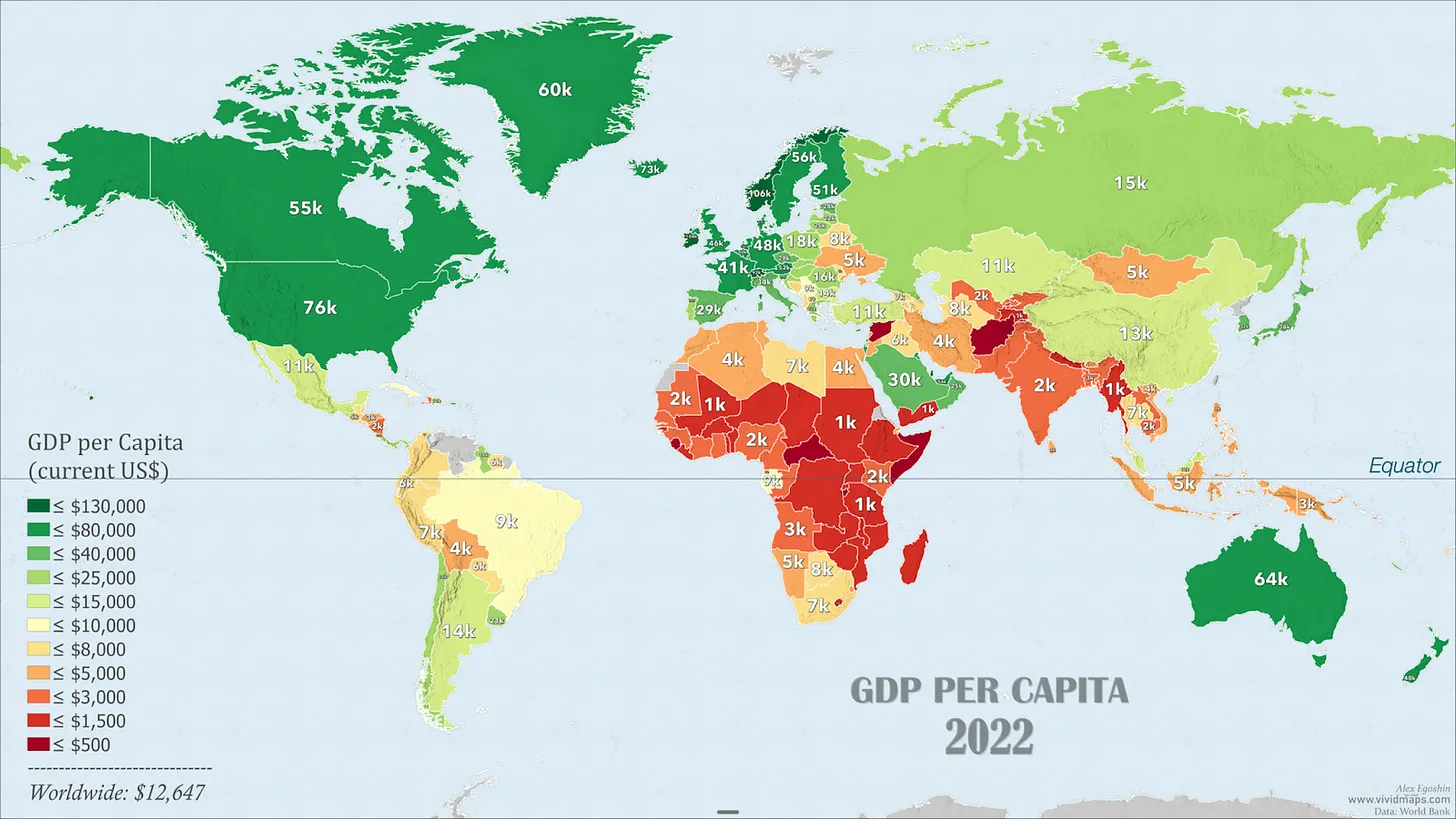
Why Warm Countries Are Poorer
Constraint often builds systems that scale into prosperity, while abundance too easily allows complacency and extraction.
One study by Dell, Jones, and Olken estimates that each degree Celsius of annual temperature reduces GDP per capita by about 8.5% on average.
Zig 2026: No-AI Policy, $670K Foundation, Left GitHub & Why Zig Isn’t 1.0 - Andrew Kelley Explains
React State Management in 2025: What You Actually Need
Which library to choose these days? Good old Redux, maybe newer Zustand, or something completely different? Why not just use Context instead?
So here’s my opinion, to kick off the discussion: you don’t need any of them!

The Multi-Repository TypeScript Problem
What if we could look at a Producer and Consumer within different repositories and compare their request and response as if they were inside a monorepo? Better yet, what about if we could do this in CI so that we can get this type checking goodness at the same point when we would typically run tsc?

How to Do Great Work
Develop a habit of working on your own projects. Don’t let “work” mean something other people tell you to do. If you do manage to do great work one day, it will probably be on a project of your own.
Four steps: choose a field, learn enough to get to the frontier, notice gaps, explore promising ones. This is how practically everyone who’s done great work has done it, from painters to physicists.
The trouble with exponential growth is that the curve feels flat in the beginning. It isn’t; it’s still a wonderful exponential curve.
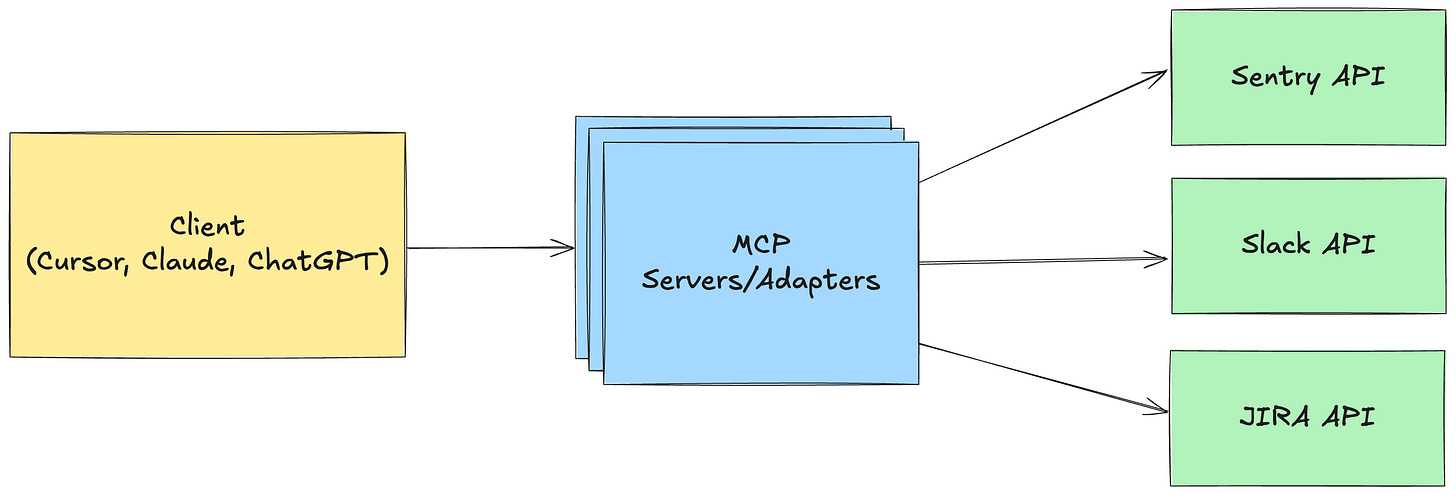
MCP (Model Context Protocol): Simply explained in 5 minutes
Put simply, MCP is a way for LLMs to more easily integrate with external tools. It’s a standard protocol that engineers can follow to expose these tools to LLMs.
Naval's Recommended Reading
The truth is, I don’t read for self-improvement. I read out of curiosity and interest. The best book is the one you’ll devour.
Read enough, and you become a connoisseur. Then you naturally gravitate more towards theory, concepts, non-fiction.
How much progress has come simply from most games not running on mac
Nearly all the best engineers, founders, and researchers I know are ex-game addicts, use macs, and occasionally google a game they’re excited about, see it’s not on mac, give up and get back to work
Imagine that nearly everyone bringing us the future were hardcore ex-heroin addicts who picked up heroin now and then, realized they didn’t have quite the right equipment to take it, then went back to making the future. afaict this is pretty close to the world we’re in
inspired by frustratedly finding out five min ago that rocket league doesn’t run on mac, which is probably good
awesome-selfhosted/awesome-selfhosted: A list of Free Software network services and web applications which can be hosted on your own servers
Self-hosting is the practice of hosting and managing applications on your own server(s) instead of consuming from SaaSS providers. A huge list of Free Software network services and web applications you can run yourself.
welp, you read it all.